
Person or Persons Unknown
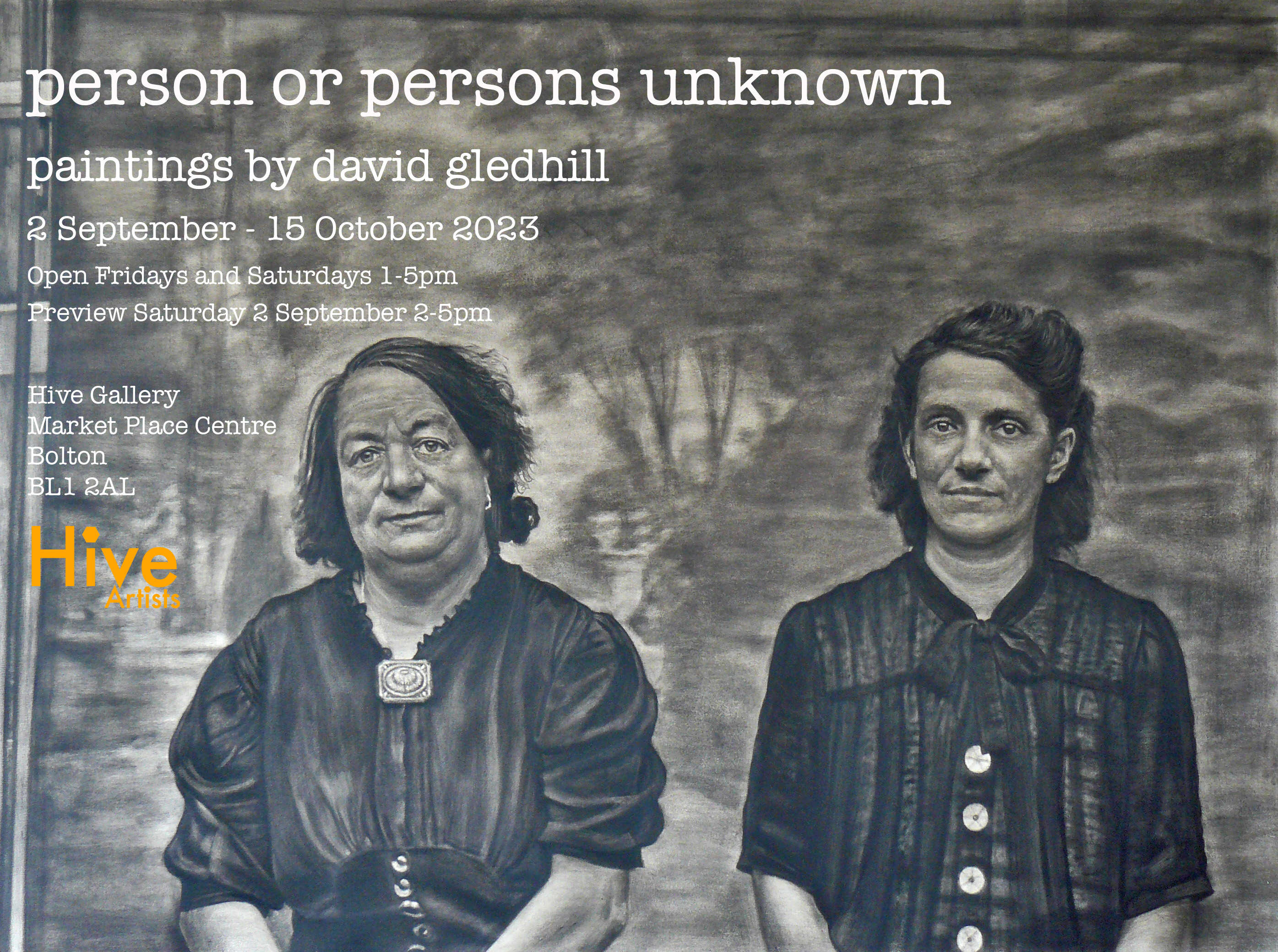
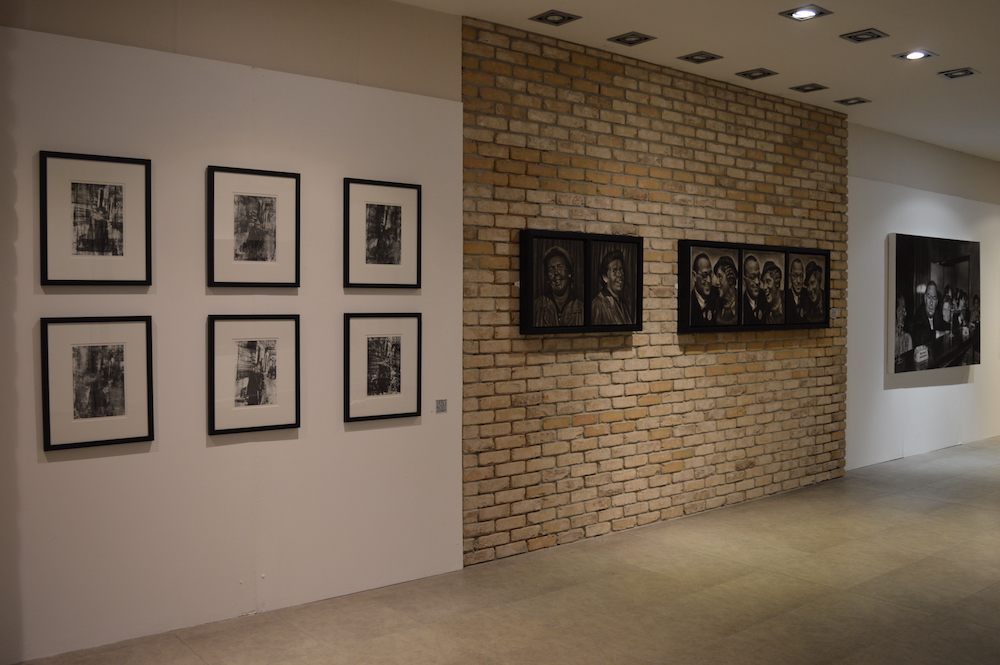
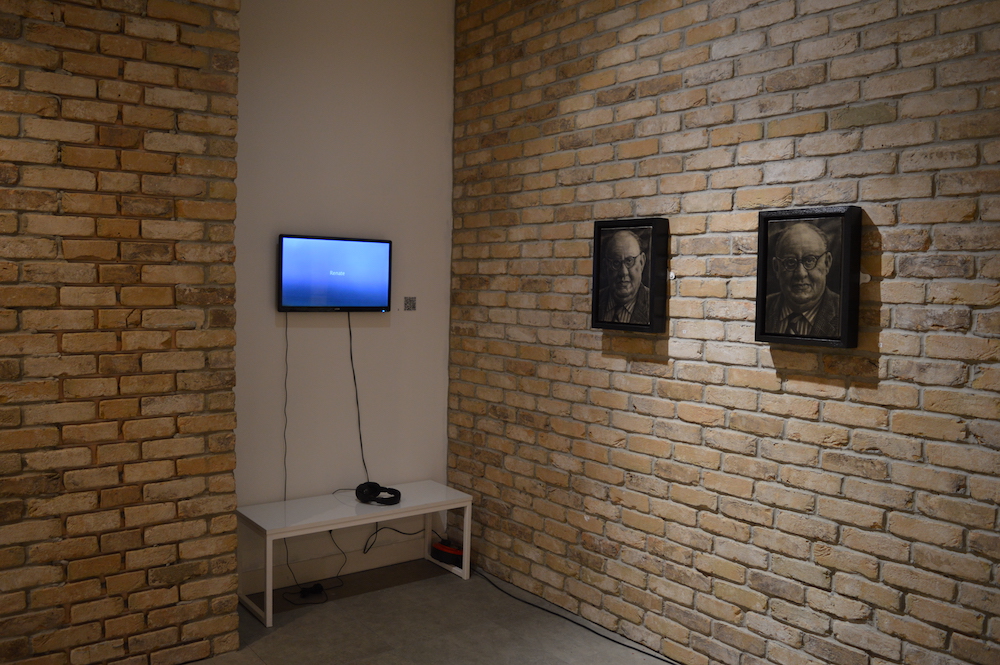
Person or Persons Unknown is the title of an exhibition held at the Hive Gallery, Bolton from September 2 – October 14, 2023. The exhibition consisted of paintings, films and assemblages produced since 2013 and based on found amateur snapshots sourced from flea markets both in the UK and abroad. The paintings depict ordinary citizens living through extraordinary times in Europe during the mid-twentieth century. The original photographs range from spontaneous snaps and photo booth sequences to official ID portraits and formal studio shots. The following essay about the exhibition was written by Phil Porter.
Slowing down the photographic instant
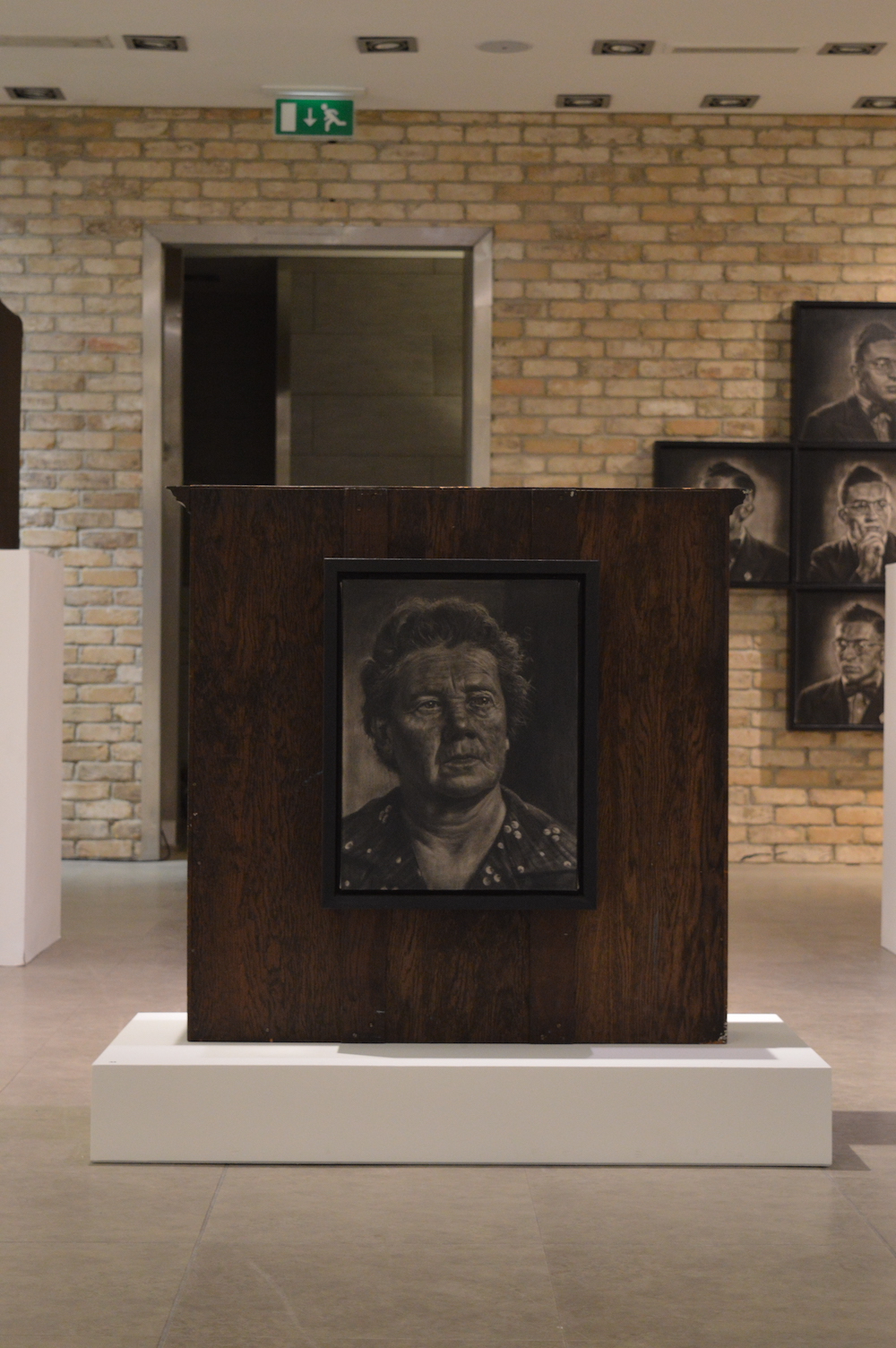
The paintings in this exhibition are situated between an infinite range of tones from black to white, within which figures and faces begin to emerge. Their apparel and backgrounds denote that they are emerging from the past, from history, and in this case a very particular part of history, that of France and Germany during and after World War II. These ‘unknown persons’ emerge out of the richest and deepest tones, out of shadows, echoing their emergence from the depths of history, of lost time. An emergence that has to do with a particular use of oil paint, where the very lightest or white passages and highlights are achieved through a subtractive process that removes and takes away pigment, back to the white ground of the primed canvas itself, to the pristine ground of the very beginning. The darkest tones, by their subtle relationship to those lightest passages, further emphasise the very ground of the painting as integral to the image itself.
This integrity gives these unknown persons a solidity, a strength of presence which now has less to do with their photographic origin, and more to do with the artist’s technique. The fleeting quality of the photograph, that split-second moment it captures at speed, has become a subtle and rich coalescence of light and dark. These portraits occur along that infinite range.
Photographically, the people that form the basis of these paintings are captured in an instant, in a strange kind of ‘forever’ to which they can no longer belong; a moment that is indefinitely prolonged or delayed. Now, the elements of that prolonged moment are slowly opened up, examined and considered, their features caressed and coaxed into being by subtle working of the paint, its addition and removal, the darkest passages of thinly applied layers giving the finer and lightest parts a crescendo like quality.
Whilst the photographic image has to do with speed, Gledhill’s technique examines the speed of that capture, thereby slowing down the photographic instant. His examination in paint gives these persons back the inherent mystery of their lives, their existence. Now is restored the depth and enigma of another time, out of which the other turns to face us. A time difficult to imagine from here, the power of these paintings is that through them we must imagine it and are compelled to enter. We become absorbed by the fluidity and flux to which the artist reconnects these people, as opposed to the veritable stasis of the photograph, they rejoin the flow of their existence.
This reconnection is also achieved by the artist’s transformation of various elements from the photographic source, (the paintings themselves, are of course, many times larger than the original source photographs, many of which are only a few inches square). In other words, what were insignificant or barely noticeable elements in the background or foreground of the photographs now become essential aspects within the pictorial space and its compositional dynamic.
And those photographs were found by chance, in various flea markets in Germany. Key to the artist’s inspiration, his source is therefore that which has been physically discarded or abandoned, (psychologically also perhaps, given the period of history they originate from). Lost, they are that which no longer belongs. But, from the stasis of the photograph, and these discarded ones in particular, Gledhill reinstates their origin in a vital living space. And whilst they still partake of the obscurity to which they have been abandoned, as we contemplate these paintings they are rescued in our engagement with them: that which is so faraway is now so close and intimate.
In this artist’s efforts to rescue the unknown person or persons from oblivion, these ordinary people from an extraordinary time, he has incorporated them into that most difficult but noble and heroic aspects of painting: that of making a work of art where the image and medium are integral to each other.







 David Gledhill Painting History